

Long before polymer science reshaped manufacturing, chemists noticed the promise of compounds like divinylbenzene. Its roots stretch back to early organic synthesis, where innovators saw potential in turning simple aromatic compounds into versatile industrial tools. As demand for plastics and resins soared in the twentieth century, divinylbenzene found itself in the limelight. Chemists harnessed its crosslinking ability to create tougher, more flexible materials. Companies moved quickly, scaling up processes to make it part of everything from water filters to chromatography columns. Over the decades, shifts in regulatory requirements, improved catalysis, and higher purity thresholds drove refinements in both production and application. Each of these moves shaped not only quality control but also human safety and environmental impact, teaching vital lessons about both progress and responsibility.
Divinylbenzene carries the unmistakable stamp of a powerful crosslinking agent, thanks to its unique structure—a benzene ring bearing two vinyl groups. Industries count on it for making polymer networks energetically strong. As a colorless to pale yellow liquid with a distinctive aromatic odor, it shows up in two isomeric forms. User experience places importance on recognizing its strengths in creating stable ion-exchange resins, supporting both chemical production and water purification. In practical terms, companies offering divinylbenzene typically differentiate grades based on isomer content and purity, targeted to the needs of processes from analytical separation to plastics engineering.
Physical properties drive handling and application. Divinylbenzene has a boiling point of about 195°C and a melting point below room temperature, which means it remains liquid through most industrial processes. Its density hovers around 0.91 g/cm3, presenting manageable transportation conditions. Its moderate volatility and distinctive odor demand respect in the work area, supporting the case for proper ventilation. With low water solubility and significant reactivity as a monomer, anyone working with divinylbenzene soon realizes the importance of good storage—seal it from moisture and oxidizers, and keep it away from sparks. The vinyl groups give it a reputation for energetic polymerization and crosslinking with styrene. For chemists, this means careful control over reaction settings, as runaway reactions risk both safety and waste.
Strict attention to detail defines quality in commercial divinylbenzene. Typical purities exceed 55%, with the remainder often composed of ethylvinylbenzene and other by-products. Certificate of analysis documentation tags each batch by composition, moisture content, color, and stabilization additives. Shipping labels reference hazard classes dictated by the Globally Harmonized System, including clear warnings for flammability and health risks. Responsible companies provide datasheets giving clear instructions for safe storage and emergency response. As with any hazardous chemical, error here doesn’t just damage product integrity—it puts people at risk. Simple habits, like checking that old or partially used containers haven't polymerized, save time and trouble down the line.
The story of manufacturing divinylbenzene begins with the alkylation of benzene using ethylene, creating ethylbenzene and its derivatives. Catalytic dehydrogenation moves the process forward, producing a mix of vinylbenzene isomers—mainly divinylbenzene alongside styrene. Fractional distillation then separates divinylbenzene based on boiling points. Real-world experience teaches that yield hinges on catalyst quality, process temperature, and careful removal of impurities. Industry moves have improved efficiency and reduced hazardous by-product formation, balancing economic pressure with environmental care. Safe plant operation here relies on a workforce skilled in process chemistry, equipment calibration, and emergency planning.
Divinylbenzene’s most famous trick—crosslinking—stands at the heart of its chemistry. Reacting with styrene, it produces a three-dimensional polymer matrix, perfect for resin manufacture. Beyond basic polymerization, scientists have tinkered with functionalizing the aromatic ring or adding other monomers for specialized performance. Post-polymerization treatments introduce features like sulfonate or amine groups, opening doors to sophisticated ion-exchange or adsorption technologies. In the lab, tinkering with catalyst choice, reaction atmosphere, and temperature brings new materials into view, some for high-value chromatography, others for advanced environmental remediation. The flexibility offered by divinylbenzene-based polymers keeps research fresh, connecting curiosity to real-world outcomes.
Divinylbenzene answers to more than one name. On datasheets you’ll find it listed as DVB, Divenylbenzol, or 1,3-Divinylbenzene. Depending on the supplier, blends of isomers get their own trade names—especially in resin products. Anyone ordering or researching should check chemical abstracts numbers (CAS 1321-74-0 for typical mixtures) and match specifications closely. This avoids confusion that could throw off experimental work or industrial runs. A seasoned lab manager keeps reference materials handy, interpreting differences across catalogs and batches.
Safety calls for more than gloves and goggles. Divinylbenzene’s flammability and reactivity with atmospheric oxygen demand strict controls over storage and handling. Work areas rely on explosion-proof equipment, solid grounding and bonding during liquid transfer, and strong ventilation to minimize inhalation risk. Training for chemical spills and first aid stands ready for every shift. Regulatory agencies—OSHA, REACH, and others—outline specific exposure limits and emergency plans, motivating companies to keep meticulous logs. I’ve seen firsthand the value of well-managed chemical inventories, where expired or contaminated stocks get pulled right away, avoiding surprise gel formation or fire risk. Success in this field grows from respect for both the hazards and the people handling them.
Polymer chemists and process engineers reach for divinylbenzene when reliability matters. Ion-exchange resins made from DVB play a major role in municipal and industrial water treatment, stripping out ions that foul boilers or taint drinking supplies. Industries count on these resins in separating valuable metals, treating pharmaceuticals, and scrubbing contaminants from wastewater. Analytical labs trust DVB-styrene columns for high-performance chromatography, chasing trace contaminants or complex biomolecules. Electronics manufacturers exploit crosslinked polymers for durability in circuit board laminates. Careful formulation lets researchers develop resins that balance toughness, porosity, and chemical compatibility, advancing the field and pushing boundaries every year.
Innovation with divinylbenzene springs from the hunt for smarter, safer, more sustainable materials. Academic teams continue to map out novel polymer architectures using DVB, often targeting environmental clean-up, catalysis, or medicine. Companies devote resources to improving process yields, minimizing waste, and inventing resins with custom-tailored reactivity or selectivity. My work in applied chemistry has shown that collaborative research across disciplines spins out creative uses, turning up ideas like advanced drug delivery systems, better adsorbents for carbon capture, or next-generation batteries. Keeping research nimble means investing in both people and pilot-scale technology, so that ideas in the lab translate to solutions in the real world.
People working with divinylbenzene deserve straight talk about hazards. Studies show that inhalation, skin contact, or accidental ingestion can cause irritation or more serious problems, making personal protective equipment and good ventilation priorities. Chronic exposure links to nervous system effects and, in animal testing, some evidence of carcinogenicity has turned up. Regulators adapt standards as science develops, tracking workplace air quality, and flagging substances of concern in end-use products. Transparent reporting about risks guides smarter handling practices, limits accidental releases, and protects long-term worker health. Ongoing toxicology research continues to probe not just acute symptoms, but subtle, long-term impacts—important for families and communities living near production facilities.
The future for divinylbenzene looks busy. As demand for clean water climbs and industrial separation gets more complex, high-performance resins will carve out even bigger roles. Scientists working at the intersection of polymer chemistry and environmental science keep the discovery engine running, designing materials for tougher conditions and higher selectivity. Changes in regulation—especially calls to phase out substances with questionable safety records—keep pressure on suppliers to improve both the purity and sustainability of DVB-based products. There’s strong potential for greener, bio-based production routes, as well as for recycling or upcycling the end-of-life resins. Given the speed of technological change, staying ahead in this field means listening to both customers and frontline staff, adapting to challenges with a blend of hard data and hands-on experience.
Water filters may look simple, but inside, there’s a bit of clever chemistry going on, much of it thanks to divinylbenzene. This chemical finds its way into household and industrial water purifiers, helping to keep drinking water clean. I remember the first time I saw a breakdown of a water softener. At the core, little resin beads, tough and resilient, owed their strength to cross-linked bonds made with divinylbenzene and styrene. These bonds help beads trap hard minerals like calcium and magnesium, swapping them for sodium—leaving water soft and better tasting.
Divinylbenzene steps in beyond just the kitchen tap. Medicine production relies heavily on chromatography, a process separating chemicals for purity. Columns packed with resin beads, again strengthened by divinylbenzene, sift out what doesn't belong, keeping drugs safe. Without those resin beads handling everything from antibiotics to vitamins, the risk of impurities sneaking into pills and tablets shoots way up. I’ve seen quality assurance teams at pharmaceutical plants treat these resin-packed columns like gold—rightfully so, since even a small impurity in medicine can lead to big health problems.
Tech gadgets are everywhere, but inside each device sits a cluster of components made possible by ultra-pure chemicals. Divinylbenzene helps out here, too. Semiconductor factories rely on ion-exchange resins for cleaning up water and chemicals used in chip-making. If the resins aren’t tough, the chips get damaged, translating into broken phones and computers. Today’s demand for smaller transistors and faster chips depends on these super-clean environments. Watching rows of wafers move through rinse tanks, I realized divinylbenzene was securing the foundation for the screens and circuits running much of our lives.
Industries producing sweeteners, plastics, and even sweet-tasting syrups lean on smart ways to swap different ions in their products. Divinylbenzene-based resins stand up better to heat and strong chemicals than other options. I’ve walked through sugar refineries where pressure and acidity reach high levels. Instead of crumbling, divinylbenzene resins keep going, making sure contaminants don’t end up in the final bag of sugar.
Clean water, safe food, and pure medicines may seem like guarantees, but they all depend on strong, reliable materials. Divinylbenzene makes a difference by forming these tough, stable polymers. Yet, chemical production creates waste and risks unless handled with care. Finding safer manufacturing processes or recycling used resins becomes important. Some companies now collect and reuse resin materials, trimming down waste and taking stress off the environment.
Whether it’s clean water after a storm, reliable power grids, or drugs with no surprises, divinylbenzene shows just how much a small piece of chemistry can shape daily life. As we look for safer, cleaner materials in the future, understanding where these invisible helpers play their part helps everyone push for smarter, safer solutions.
Divinylbenzene pops up mostly in the chemical industry world, known for boosting performance in polymers and resins. This isn’t some rare or boutique material. Chances are, you’ll find it in places most folks never see—industrial water treatments, certain plastics, even some kinds of specialty adhesives. Most people don’t run into pure divinylbenzene at the hardware store, but folks who work near it, or use products made from it, probably come into contact more often than they realize.
Getting hands-on with divinylbenzene means dealing with some real health risks. Short-term exposure usually means skin, nose, or throat irritation. Longer stretches and higher amounts crank up the trouble: headaches, dizziness, and for some unlucky people, allergic skin reactions. There’s more at stake for folks who breathe in the stuff over and over, or who don’t get the chance to protect their skin at work.
The Environmental Protection Agency and the Centers for Disease Control and Prevention have both flagged divinylbenzene as harmful. According to the CDC, breathing in high levels may hurt your nervous system. I once spent a summer at a plastics plant, and the headaches some coworkers complained about weren’t just Monday morning blues. Reports from workers in similar industries point to the same stuff: irritation, fatigue, and a general sense of feeling “off” after working around these chemicals.
Stories keep coming out of manufacturing towns where chemical safety corners get cut. People often pay the price not right away, but years down the line. Divinylbenzene, like many volatile organic compounds, lingers longer than the initial smell. Animal studies have even linked repeated exposure to organ damage—especially in the liver and kidneys. Humans don’t get off any easier, especially if protections aren’t in place.
OSHA includes divinylbenzene in its list of hazardous substances. The National Institute for Occupational Safety and Health also recommends strict exposure limits and proper protection for folks at risk. That means well-fitted gloves, respirators, and good ventilation—the basics, but not always the reality. Walk into too many shops and plants, though, and stories about “lax enforcement” or broken fans aren’t rare.
Safety doesn’t always come down to strict rules; culture shapes habits. Real change comes when bosses value employee health over speed. Self-audits, easy access to updated safety data sheets, and better training can help make divinylbenzene less of a danger. I’ve seen small shops change attitudes fast after one close call, especially when folks share responsibility for keeping each other safe.
Regular medical checkups for workers and clear communication of risks go a long way, too. Some factories now rotate jobs or use closed systems to keep exposure to a minimum. Switching in newer, less toxic alternatives takes money and guts, but folks working on the line deserve the investment.
Nobody should expect zero risk from any chemical. That said, the risks around divinylbenzene often fly under the radar until someone gets sick. Real accountability and care, both from company leadership and regulatory agencies, give people on shop floors a fighting chance to work safely. Decades of lessons show: where chemicals like divinylbenzene show up, close attention to health isn’t optional—it can be the difference between staying healthy and struggling for years to come.
Divinylbenzene brings a lot to the table in industrial environments. Used in manufacturing resins and important plastics, its presence in storage sheds and labs stretches worldwide. Handling it day in and day out, you spot a truth: substances like this one rarely forgive a sloppy setup. One careless move and you may find yourself dealing with chemical spills, ruined product, or even fires.
This stuff carries a reputation for being both flammable and reactive. Heat and open flames spell trouble. Breathing in its vapors doesn't just rattle the lungs, either. Eyes and skin take a beating after brief exposure, leading workers to call for better ventilation and strong protective gear in real storage rooms. Safety officers often check these rooms for outdated equipment, missing warning signs, and stacks of damaged containers.
Experience shows that temperature makes a huge difference. During the height of summer, warehouses reach dangerous highs. Extra heat can trigger polymerization reactions and generate dangerous pressure. Instead of risking fires, seasoned handlers keep Divinylbenzene away from south-facing loading docks and permanent sunlight. A few times, we've seen drums bulging or leaking. Ignoring temperature controls, even for a week, creates damage that racks up in insurance claims.
No one wants vapor clouds building up indoors. Workers agree: sharp, chemical odors hint that storage rooms need a better airflow setup. This includes mechanical exhaust systems with explosion-proof features, not just a cracked window. Keeping the area dry also matters, as moisture inspires chemical reactions with certain packaging. I've seen rusty barrels leaking after a few months when dehumidifiers stopped working, putting everyone at risk.
Divinylbenzene mixes poorly with strong oxidizers and acids. Placing it by chlorine-based pool chemicals, for example, turns an ordinary storeroom into a bomb. Forklift drivers on night shift should not face racks overcrowded with incompatible drums. To prevent cross-contamination, I’ve seen dedicated shelving, painted floors, and posted color-coded charts that help workers spot errors before they turn costly.
Sprinkler heads and CO2 fire extinguishers scattered throughout the storage room provide some peace of mind. Insurers ask companies for up-to-date inspection records. Emergency drills and regular walk-throughs keep people alert to the dangers. Workers regularly switch out old rags and stained absorbent pads. If a spill happens, the right response means using the right neutralizers and containment kits.
Personal experience with plant inspections proves that careless attitude quickly leads to disaster. Some workers forget resting hot work tools near flammable storage areas, and others skip labeling drums in a rush. Both mistakes create lasting headaches. The best-run warehouses set clear ground rules right at the entrance, with wall posters spelling out flammability hazards, personal protective equipment, and spill response steps.
Proper training turns out to be the best first defense. Site leads with long-term experience walk new hires through each risky zone. Inventory systems reduce overstocking, and digital logs track shelf lives—crucial, since old Divinylbenzene tends to go bad fast. Insurance companies pitch in with regular audits and discounts for meeting safety standards.
Better container design—think sturdy, leak-proof barrels—cuts down spills caused by rough handling. Facilities swap out old lighting for spark-proof fixtures and set up backup power for climate control. Investing up front cuts actual costs compared with cleaning up contaminated sites or facing emergency shutdowns.
Safety with Divinylbenzene isn’t complicated. It depends on paying attention, watching for warning signs, and sticking to proven routines built up by hands-on experience and attentive teamwork.
Divinylbenzene is an interesting organic compound, built around a benzene ring holding two vinyl groups. Its chemical formula, C10H10, sounds simple at first, but don’t let that short string of letters and numbers fool you. There’s some real complexity packed into its framework. The presence of two “vinyl” groups, which are basically small double-bonded bits coming off the benzene ring, makes it far more reactive and useful than plain benzene or even styrene.
Each time a company or researcher uses divinylbenzene, that formula shapes everything from the reactions it sparks to the shape of final products. Since the molecule offers two points of attachment, it acts like a bridge builder in chemistry. In my experience working in a lab focused on polymer science, I saw first-hand how just a small change in a formula can completely reshape how polymers form and behave. With divinylbenzene, crosslinking becomes simple and efficient, allowing materials to hold up under tough conditions.
Industry relies on these properties. Divinylbenzene’s formula means it doesn’t just float around on its own. It likes linking up, building networks, making strong, stable structures. For instance, those rigid resins in water filters owe their toughness to this molecule. People expect a filter to last through hundreds of cycles. That’s not possible without that extra rigidity—something only a handful of chemicals like divinylbenzene can provide, thanks to their specific molecular backbone.
Clear understanding of the formula does more than guide research. C10H10 carries weight when handled, stored, or regulated. Shortcuts in protection quickly lead to regrets, since volatile organic chemicals can harm air quality and human health. Handling divinylbenzene needs smart preparation—a working fume hood, sealed containers, gloves rated for solvents, and clear safety procedures. In one memorable training session, we saw what happened with a minor spill. Vapors led to headaches and coughing almost instantly. That lesson stuck.
Environmental protection agencies watch compounds like this closely. The reactivity that makes divinylbenzene so useful also raises red flags for contamination and long-term persistence if spilled. That puts a spotlight on every step from shipping to disposal. Engineers and operators must put strong systems in place: good ventilation, spill containment, real-time monitoring, and waste treatment. Investment in these tools eventually pays off—cleaner workplaces, fewer accidents, and peace of mind for everyone downwind or downstream.
Science doesn’t stand still. Researchers keep searching for greener alternatives and safer production processes. In resin plants, new catalysts and improved reaction controls shrink both energy use and waste. Students and young chemists often ask how much of that improvement really depends on chemical structure. I tell them: the formula shapes options at every turn. Modifying the vinyl groups might decrease hazard or boost recyclability, so a deep understanding of C10H10 opens the door to better innovations.
Working with divinylbenzene means respecting its potential and its risks. Knowledge of the chemical formula doesn’t just stay on paper; every atom and bond matters, every time someone pours it from a bottle. Attention to detail transforms a hazardous liquid into a backbone for safe, reliable, and groundbreaking materials.
Divinylbenzene often stays out of the headlines, but its fingerprint shows up in a surprising number of places. Take water treatment. Large-scale facilities wouldn’t work as smoothly without the resins made using this compound. These resins do the hard labor—pulling out minerals that block pipes and setting aside the stuff that leaves water tasting funny. Watching a home softener in action, it’s easy to forget what’s in the background, but divinylbenzene crosslinks form the backbone of the beads inside. That network holds up, cycle after cycle, in part thanks to chemistry that’s more stubborn than a summer heatwave.
The pharmaceutical world deals with high stakes. Impurity can cost more than money—it can cost trust. Divinylbenzene-based resins give labs sturdy tools for separating out what the body doesn’t need from the compounds that save lives. It’s not flashy work. Still, without that toughness, medicines would run a bigger risk of spoilage or loss in transit. I spoke with a friend working in quality control: she said that switching to divinylbenzene crosslinked polymers kept her lab’s columns working reliably far beyond the competition. More reliable results mean fewer headaches for everyone down the line.
Any chip manufacturer faces a tough job. They compete on size, speed, and efficiency. Every step in that process runs into harsh chemicals and high temperatures. To handle these extremes, chip manufacturers turn to divinylbenzene in their specialty resins. These resins don’t easily give up their shape—heat and harsh solvents won’t crack them. Talking with engineers in that field, it’s clear: as circuit boards shrink, the margin for error falls. The right polymer can make or break an assembly. As consumers, we depend on this every time we power up a new device.
Refineries move at a punishing pace. They need catalysts that survive harsh runs and don’t crumble after a couple of cycles. Crosslinked polystyrene beads made with divinylbenzene give these plants an edge by boosting catalyst lifespan. The resin lets catalysts keep working longer, helping squeeze out more value from every barrel of crude. A few years back, the market saw plants using inferior beads get hit with costly shutdowns, while others running divinylbenzene-based resin simply kept moving. That’s not just cost savings. It can shape energy supplies and the price at the pump.
One challenge comes with waste. Resins don’t last forever, and disposal creates headaches. Recycling and regeneration tech is moving fast—it’s possible to recharge some spent resins, sending them back for another cycle of filtration. Chemical engineers and waste managers have to innovate, not only to keep the industry running but to lighten its environmental load.
Divinylbenzene might not land glitzy headlines, but factories, labs, and homes all lean on its unique strengths. It holds things together where lesser chemicals fall apart. The industries listed prove that, sometimes, it’s the behind-the-scenes players that keep everything humming. The next step will focus not just on performance, but on smarter, greener ways to use and reuse these materials.
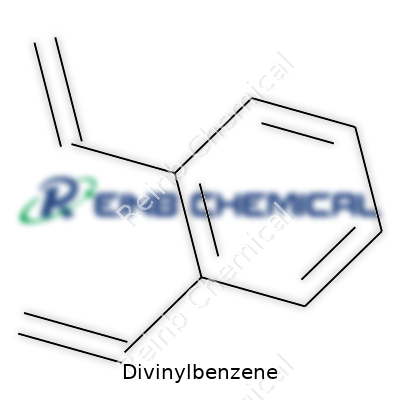
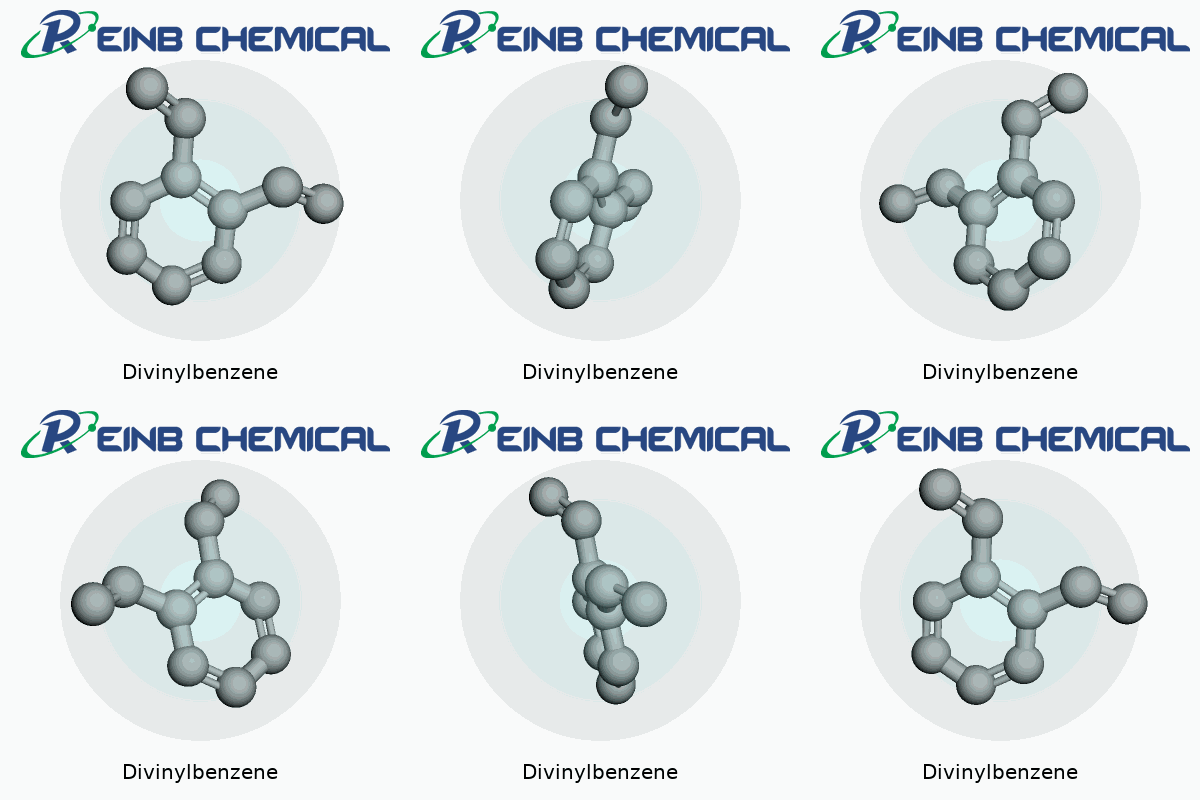
| Names | |
| Preferred IUPAC name | 1,2-diethenylbenzene |
| Other names |
DVB Diethenylbenzene 1,2-Divinylbenzene 1,3-Divinylbenzene 1,4-Divinylbenzene m-Divinylbenzene o-Divinylbenzene p-Divinylbenzene |
| Pronunciation | /daɪˌvɪn.ɪlˈbɛn.ziːn/ |
| Identifiers | |
| CAS Number | 1321-74-0 |
| Beilstein Reference | '2041565' |
| ChEBI | CHEBI:34693 |
| ChEMBL | CHEMBL14329 |
| ChemSpider | 54809 |
| DrugBank | DB14045 |
| ECHA InfoCard | 100.003.671 |
| EC Number | 210-871-0 |
| Gmelin Reference | 744 |
| KEGG | C01783 |
| MeSH | D006408 |
| PubChem CID | 7502 |
| RTECS number | CZ9625000 |
| UNII | RJ4773748O |
| UN number | UN3076 |
| Properties | |
| Chemical formula | C10H10 |
| Molar mass | 130.19 g/mol |
| Appearance | Colorless liquid |
| Odor | pleasant aromatic odor |
| Density | 0.909 g/mL at 25 °C |
| Solubility in water | insoluble |
| log P | 2.7 |
| Vapor pressure | 3.8 mmHg (20 °C) |
| Basicity (pKb) | 12.57 |
| Magnetic susceptibility (χ) | -7.87 × 10⁻⁶ |
| Refractive index (nD) | 1.544 |
| Viscosity | 1.13 mPa·s (25 °C) |
| Dipole moment | 0.55 D |
| Thermochemistry | |
| Std molar entropy (S⦵298) | 257.8 J·mol⁻¹·K⁻¹ |
| Std enthalpy of formation (ΔfH⦵298) | 159.7 kJ/mol |
| Std enthalpy of combustion (ΔcH⦵298) | -3593 kJ·mol⁻¹ |
| Hazards | |
| GHS labelling | GHS02, GHS07 |
| Pictograms | GHS02,GHS07 |
| Signal word | Danger |
| Hazard statements | H225, H302, H315, H319, H332, H335, H340, H350 |
| Precautionary statements | P210, P233, P240, P241, P242, P243, P261, P264, P271, P280, P303+P361+P353, P304+P340, P305+P351+P338, P312, P337+P313, P370+P378, P403+P235, P405, P501 |
| NFPA 704 (fire diamond) | 2-3-2-W |
| Flash point | 80 °C (176 °F) |
| Autoignition temperature | 500 °C |
| Explosive limits | Explosive limits: 1.1–6.1% |
| Lethal dose or concentration | Rat oral LD50 911 mg/kg |
| LD50 (median dose) | LD50 (median dose) of Divinylbenzene: "680 mg/kg (oral, rat) |
| NIOSH | QV3150000 |
| PEL (Permissible) | 100 ppm |
| REL (Recommended) | 50 ppm |
| IDLH (Immediate danger) | 100 ppm |
| Related compounds | |
| Related compounds |
Styrene Ethylvinylbenzene Polystyrene Polydivinylbenzene |




