

Diethylbenzene didn’t spring up overnight. As chemists worked through the byproducts of the booming petroleum industry, folks dug into the variety of aromatic hydrocarbons they were getting from crude oil. Among these, diethylbenzene stood out for its role in synthetic chemistry, especially during the mid-20th century push for more efficient industrial solvents and reagents. Workers in refineries and labs found it after cracking processes got refined, and it soon became a recognized substance thanks to its clear benefits over some relatives like xylene in certain reactions. Its groundwork can be seen alongside benzene’s dominance, but those extra ethyl groups changed the conversation when higher boiling points or selective reactivity was useful.
This aromatic hydrocarbon, sometimes called DEB, brings three isomers — ortho, meta, and para — due to the two ethyl groups attaching themselves to the benzene ring in different places. Those variations matter when it comes to how DEB gets pressed into service. The clear, colorless liquid doesn’t try to grab attention, yet it pulls its weight in chemical plants and R&D settings. Most commonly sold as a mixture of these three forms, it gets bottled by the drum and, at times, fine-tuned through separation for high-purity needs.
If you poured DEB out into a glass, you’d see a liquid without much scent, boiling above 180°C, and not mixing with water. Its low polarity and high boiling point mean it often replaces solvents like xylene when folks want something that evaporates more slowly and resists dissolving in polar fluids. These characteristics let it settle into specific industrial roles, especially where high-temperature reactions or specialty coatings benefit from a good solvent that won’t flash away quickly. Chemically, those ethyl side chains on the benzene ring make it more reactive during sulfonation or nitration, a detail that keeps it interesting for refining and synthesis teams.
Each barrel or bottle of DEB comes stamped with a CAS Number, UN shipping code, and the percentage makeup of the three isomers. Most suppliers show a purity of over 98%, giving buyers a good sense of what’s inside. Labels bear flammability warnings, pictograms for skin and respiratory hazards, and sometimes extra guidelines for industrial hygiene, since the solvent shares some risk traits with other aromatics. No need to guess: specifications spill out clear numbers for boiling point, melting point, density, and flash point, letting plant managers and lab techs set their own protocols for handling and storage.
Industrial synthesis of diethylbenzene relies on alkylation — a reaction where ethylene meets benzene, usually under an acid catalyst like aluminum chloride or zeolites. Companies put a lot of effort into controlling temperature and catalyst life to cut down on byproduct formation, especially since dialkylated products like DEB can compete with mono-alkylated ones such as ethylbenzene during the process. Following separation, distillation columns pull apart the isomers, although many applications just use the mixed product. Shelf-scale production copies some of these steps in glassware for R&D, keeping the chemist’s hands on process variables until the right result shows up.
DEB finds itself in all sorts of classic aromatic chemistry — think nitration for downstream explosives or pharmaceuticals, sulfonation for surfactant work, or oxidation for niche intermediates. Those ethyl groups open the door for side-chain functionalization as well, not just electrophilic substitution on the ring. Chemists sometimes call it 1,2-, 1,3-, or 1,4-diethylbenzene by isomer, or fire out shorthand like DEB, DBE, or even use brand-like names if a particular grade comes padlocked to a company’s catalog. This variety sometimes causes confusion, so double-checking the label and structure before pipetting pays off.
Anyone who’s worked with diethylbenzene knows spill management and ventilation aren’t optional. Its flammability sneaks up if you’re not careful, and inhaling fumes or skin exposure brings health risks that echo other aromatics — from dizziness or headache on short-term exposure to possible liver effects with repeated high doses. In a well-run facility, gloves, goggles, containment trays, and extraction fans are the norm. Emergency teams on the plant floor set clear spill protocols, while shipping partners track UN numbers and hazard classes. Regular monitoring of ambient air and personal exposure collects the data needed to catch issues early.
Industry banks on DEB as a solvent for resins, paints, and specialty polymer formulations, especially where longevity and high temperature tolerance matter. It finds life as a plasticizer, gets thrown into the search for better electrolytes in batteries, or acts as an intermediate when downstream products in the fragrance and surfactant realm need a stable aromatic backbone. Electrical transformer oil manufacturers look to DEB’s stability and insulating properties, testing formulations to boost equipment life. Research labs continue to probe new uses, especially as advanced materials and cleaner technologies push the envelope.
Scientists keep probing DEB’s reactivity, modeling how those ethyl groups steer everything from product purity to environmental breakdown. Industrial teams run process simulations to squeeze out higher yields with fewer emissions, while startups look for green alternatives to both production and reclamation. Academic projects chase catalytic tweaks to lower energy demands, perhaps even swapping out legacy acid catalysts for reusable options. Every time someone finds a new modification, solvent-grade DEB gets pulled in for a pilot trial, showing that past and present R&D work together more closely than it might seem.
There’s no hiding the fact that diethylbenzene shares some worrisome behavior with aromatics. Short-term inhalation or dermal exposure doesn’t usually bring heavy effects, but headaches, irritation, and nausea pop up if levels climb. Toxicity studies on animals flag higher risks when subjecting subjects to large amounts — especially liver and kidney impacts behind the scenes. Regulatory agencies keep toxicology data on file, setting workplace limits and environmental discharge caps to keep a lid on exposure. Plant safety teams run regular refresher trainings, while EHS personnel compare monitoring data to legal thresholds.
DEB’s future stands tied to both regulatory updates and the hunt for sustainable chemistry. As the pressure builds to replace legacy solvents and intermediates with greener options, chemists eye modifications to the production route, perhaps shifting away from traditional feedstocks or adopting newer catalysis paths. The boom in battery and electronics manufacturing could nudge DEB up the value chain, while the rise in environmental standards demands recycling and waste treatment work keep up. For anyone working in chemical innovation, diethylbenzene represents both a challenge (safety and sustainability) and an opportunity (performance in specialty applications), and the story will keep evolving with pressure from both regulation and creativity.
Diethylbenzene slides under the radar in everyday life, but it pops up in industries all around us. As an organic compound, it falls into the family of aromatic hydrocarbons. In simple terms, it works best as a solvent and as a building block for other chemicals.
Factories tap diethylbenzene to help separate and purify other substances. The way it dissolves but avoids mixing with water puts it in a sweet spot for chemical processing work. I’ve seen chemical engineers measure and pour out this colorless liquid in labs, counting on its reliability to deliver consistent results batch after batch.
One big area that relies on diethylbenzene sits in water treatment. Water softeners and purification plants lean on this compound to make ion exchange resins. These resins help pull out calcium and magnesium that make water "hard." Cleaner water matters for everything from drinking to keeping boilers and pipes from clogging up with scale.
The path from diethylbenzene to these resins runs through a series of steps and reactions that call for steady control and careful handling. If you’ve ever enjoyed the benefits of soft water or high-quality bottled water, thanks goes to the chain of chemicals starting with diethylbenzene.
Beyond resin, diethylbenzene steps up as a feedstock for more advanced chemicals. Its structure makes it a good candidate for further tweaks and transformations. Chemical companies rely on this for making additives, dyes, and sometimes pharmaceuticals. Its presence in these processes keeps costs in check while keeping a steady pipeline of raw materials open for manufacturers.
I've spoken to chemical workers who value that versatility. Formulators can shift between products without constant recalibration, as diethylbenzene offers predictable performance. This sort of adaptability makes a big difference in fast-paced environments where time, consistency and safety count.
Like many other industrial chemicals, diethylbenzene comes with a set of risks. It can irritate skin, eyes, or lungs if handled carelessly. Spills call for quick cleanup with proper gear. At industrial scales, proper storage and ventilation matter every bit as much as technical skills. Health and safety officers drill these lessons into every person working with the chemical.
Questions about long-term environmental effects keep popping up, too. The chemical doesn't break down quickly in soil or water, so accidental releases can linger. People in environmental safety roles have pushed for better monitoring and tougher limits on discharge. Some companies have switched to closed-loop systems, cutting out leaks and recycling as much as they can.
Overall, diethylbenzene plays a background role in the things people take for granted, from tap water to plastic parts. But there’s a growing push for smarter use and greener handling—especially as more attention lands on chemical footprints. Investments in safer alternatives and tighter oversight could make a real difference, helping industries keep the benefits while managing the risks. As someone who’s spent time in industrial labs, these improvements aren’t just a trend—they’re possible, and they matter for everyone down the line.
A bottle marked “diethylbenzene” in a lab usually rings a quiet bell for people trained in chemistry. This substance, a clear liquid with a faint odor, shows up in places where industry wants to make plastics, resins, or even help clean out engines. On paper, it seems like one of a thousand obscure building blocks. In reality, a person working in a factory or handling cleaning chemicals might breathe or touch diethylbenzene more than expected.
My first experience with lab solvents reminded me pretty quickly not to take strange smells lightly. Diethylbenzene evaporates at room temperature, which means anyone working nearby can end up breathing its vapors if there’s poor ventilation. This chemical doesn’t carry the fame—or the danger—of something like benzene or formaldehyde, but that isn’t a free pass.
Fact: research shows that prolonged exposure in poorly ventilated spaces leads to irritation of the eyes and skin. The vapor can make your nose, throat, or lungs burn and itch. Short-term effects often show up as headaches, dizziness, or even a sore throat. People sometimes brush off a headache or a little skin rash at work, chalking it up to stress. In places with chemical exposure, small signs sometimes tell bigger stories.
The National Institute for Occupational Safety and Health (NIOSH) and Environmental Protection Agency (EPA) both consider diethylbenzene a chemical worth watching. There isn’t enough published data to call it a proven carcinogen like its chemical cousin benzene, but studies raise enough questions to treat it with caution. Take animal studies as an example—chronic exposure has led to changes in organ weights in lab rats, which always makes regulatory agencies keep a close eye.
Diethylbenzene can also get absorbed through the skin, not just the lungs. If anyone splashes it on their hands, especially over and over, the chemical causes redness, dryness, and that itchy feeling that never quite fades until you scrub with soap and water. Over longer stretches, constant low-level contact sometimes sparks concern about damage to internal organs, especially the liver and kidneys, since these organs clear out bloodstream toxins.
Inside factories, most folks wear gloves and masks because the rules say so. Yet, not everyone has the time or training to learn why those rules exist. Personal experience taught me that even the most cautious people sometimes slip up, especially at the end of a double shift. More than a few warehouse workers find small leaks or strong smells and just turn on a fan, hoping it’s enough. Yet, ventilation systems and open windows only do so much if the chemical sticks around in the air or seeps into skin over time.
For anyone working near diethylbenzene, checking that safety protocols are practical makes a big difference. Simple steps like fresh air in the work area, good gloves, and cleaning up spills immediately knock down many health risks. I’ve seen clear labels and emergency wash stations help prevent accidents. Training sessions—especially hands-on ones—help folks recognize signs of overexposure and take breaks or see a doctor if symptoms come up.
Changing chemicals to safer ones, where possible, always stands out as the smart move. A quick look through alternatives sometimes finds less volatile solvents for the same job. If that switch isn’t on the table, companies can rotate tasks so nobody spends eight hours in direct contact with vapors or splashes. Good workplace practices turn scary warnings into manageable risks, and most folks breathe easier knowing there’s a plan beyond a printed safety poster on the wall.
Diethylbenzene comes down to a pretty straightforward formula: C10H14. This structure means you’re looking at a benzene ring with two ethyl groups replacing a couple of hydrogens. It seems like just another organic compound, but it matters a lot more than it looks at first glance. The different positions of those ethyl groups—ortho, meta, and para—change the game for its properties and uses. That adaptability is something I learned to respect pretty quickly in the lab, especially comparing how the para form holds up in solvents and chemicals.
Chemical manufacturing relies on a deep understanding of formulas like C10H14. Diethylbenzene shows up as both a solvent and an intermediate for making other chemicals. I’ve worked on solvent recovery lines where knowing you're dealing with diethylbenzene tells you a lot about toxicity, reactivity, and even insurance requirements. For instance, its stability makes it a safer choice compared to other aromatic hydrocarbons in some settings, but it isn’t harmless. People who spend enough time around open drums start to appreciate health data and the importance of personal protection equipment.
If you ever get involved in environmental cleanup, you run into EPA sheets demanding the chemical formula. I saw it first-hand after a storage tank leak, which meant all hands on deck with spill response and documentation. There’s no way to fudge answers here; getting the formula right changes the physical and chemical clean-up process. C10H14 doesn’t just look pretty on paper—its volatility and water-solubility guide the tools and methods we pull off the shelves. Facts matter more than ever under pressure and scrutiny.
Google’s E-E-A-T principles push for safety in content, and for good reason. Toxicity profiles for diethylbenzene aren’t just academic trips through an MSDS binder. Exposure can trigger headaches and breathing irritation, sometimes worse with prolonged or high-level contact. I’ve seen coworkers underestimate low-odor solvents before, only to end up regretting it. Knowing that you’re dealing with C10H14 prompts you to check ventilation systems or upgrade gloves, not just grab whatever’s nearby.
Communities living near chemical plants trust that the right knowledge turns into proper handling. Diethylbenzene spills can work their way into waterways if protocols slip. This puts a spotlight on prevention and fast response. I’ve been through tabletop drills where every minute counted. Identifying C10H14 quickly gave first responders an edge—knowing what evaporates, what floats, what sinks changes rescue and cleanup decisions. Getting these steps wrong can hurt people and the environment for years.
Companies owe it to staff and neighbors to keep updated safety data on chemicals like diethylbenzene. Posting chemical formulas where people can see them is a small but important step. From high school chemistry labs to industrial warehouses, sharing this basic information improves outcomes and reduces accidental exposure. I’ve found that the more you treat staff and community members as partners in safety, the fewer accidents you see. The formula by itself may look simple, but its real-world impact runs deep.
Diethylbenzene doesn’t always make the headlines, but anyone working with industrial chemicals understands its risks. Sporting a low flash point and a high vapor pressure, diethylbenzene poses fire hazards that can’t just be ignored. Fires in storage facilities usually result from poor housekeeping or carelessness. People who deal with chemicals every day know those small mistakes—leaving lids loose, ignoring leaks—lead to big problems. That’s why only proper storage stands between a routine shift and an emergency.
Every warehouse worker or lab tech has seen the trouble that comes from crowding storage rooms or stacking solvents by the door. Flammable liquids like diethylbenzene should stay in cool, dry places away from sunlight or ignition sources. We’ve all heard the fire marshal’s speech about keeping chemicals in approved steel cabinets with self-closing doors. It sticks because the risks are real: a spark from a faulty outlet or even static electricity can ignite vapors. Industry experience supports this. According to the National Fire Protection Association, chemical storage remains a leading cause of industrial fires. It’s simple: if it smells strong or evaporates quickly, tuck it far from the break room and always in a locked cabinet.
Labels fade over time and bottles get swapped around. Relying on faded ink just isn’t good enough. Experienced workers keep backup logs and clear tags, updating them when containers get refilled. Spills tell the real story about how well a chemical is managed. Most spills happen when containers get moved around too much, or when people try to pour from big drums without using a pump. The cleanup puts everyone on edge—nobody wants to breathe in those fumes or risk a skin splash. Quick response kits, like absorbent pads and neutralizers, belong in easy reach, not buried beneath a pile of empty boxes.
Anyone can fill out safety training paperwork, but following through on the job makes the difference. My years on the plant floor taught me the value of short, focused safety demos every couple of months. New hires need more than a manual—they gain confidence from seeing someone actually show how to move and open a drum, hook up a fume hood, or check a respirator. Accidents drop when people talk out loud about risks, like what’s flammable, what gets recycled, and how to respond if something goes wrong. OSHA points out that regular refresher training makes people less likely to fall into bad habits that put them and the company at risk.
Storing diethylbenzene isn’t about locking it in a closet and forgetting it. Fire-resistant cabinets, decent air ventilation, and routine checks on containers build real safety. Routine inspections catch corroded lids or mystery stains before they mean trouble. Strong policies only work if senior staff support them and set an example on the floor. Staying organized, marking dates on storage logs, and keeping fire extinguishers within arm’s reach go a long way. Local fire codes set some bare minimums, but nobody ever regretted going above and beyond.
Expertise counts more than any manual. Employees who stay curious, keep learning, and share what they spot with others help everyone get home safe. Handling chemicals like diethylbenzene properly comes down to a culture that respects real-life lessons, not just regulations on paper.
Diethylbenzene doesn’t get the spotlight much outside chemistry labs, yet its physical properties sneak into quite a few corners of daily life. At room temperature, this chemical sits in a clear, colorless liquid state. It holds a faint, sweet aroma. If you’ve ever spent time around paint thinners or industrial solvents, chances are you’ve already caught a whiff of it. Unlike water, it refuses to mix easily, floating on top instead, thanks to a lower density of just under 0.87 grams per cubic centimeter.
Melting and boiling points aren’t just technical specs. Diethylbenzene sets itself apart with a high boiling point—somewhere around 180 to 186°C depending on the isomer. This makes it tough to evaporate under normal circumstances. Chemists and manufacturers respect this trait since it holds up well against heat. As someone who spent years troubleshooting chemical spills in an old refinery, I’ve seen what a solvent with a low flash point can do—flash fires don’t give much warning. Diethylbenzene’s relatively high flash point (close to 64°C) adds a margin of safety in storage rooms and tank farms.
Every manager in the industrial sector has to figure out what to do with solvents that don’t mix with water. Diethylbenzene’s low water solubility translates to a persistent layer if a spill happens—making cleanup a real challenge. Once, on a treatment team, we observed a batch of cooling water fouled by leaks. Since diethylbenzene resists water, oily slicks kept forming, guiding us straight to the leak source. Its ‘oiliness’ makes it a favorite in applications where dissolving oily additives matters, such as fuel blending or lubricant formulation. Scientists tapped this quality more than once to selectively draw out specific chemicals from petroleum streams.
Low vapor pressure—about 0.2 mmHg at 20°C—gives operators less to worry about with large tanks. Less vapor means reduced evaporation, and that eases concerns over emissions, workplace exposure, and lost dollars. I once met a logistics manager who griped about constantly refilling tanks of more volatile chemicals. Diethylbenzene stayed put, dodging half the headaches. Still, proper ventilation and careful handling matter. Even a low-volatility chemical shouldn’t be underestimated; inhalation risks persist in poorly ventilated sites.
Flammability stands out as a double-edged sword. Diethylbenzene burns and needs careful respect near open flames, yet compared to lighter solvents, it holds back. Its flash point sits higher than toluene or xylene, which makes it less prone to accidental ignition. Where safety margins are stretched thin, that counts. Manufacturing plants rely on these extra degrees of protection, particularly where supervision runs short or training turnout falls behind schedule.
Smart handling of diethylbenzene starts with knowing these physical properties. Ignoring a chemical’s boiling point or solubility can spell disaster for both safety and the bottom line. Workers, plant managers, and environmental teams need this data close at hand. Routine training on what to do during leaks, spills, or fires makes all the difference. Upgrading containment systems, isolating solvents, and investing in real-time air monitoring cut risks further.
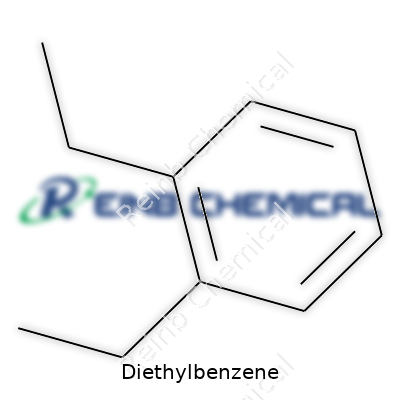
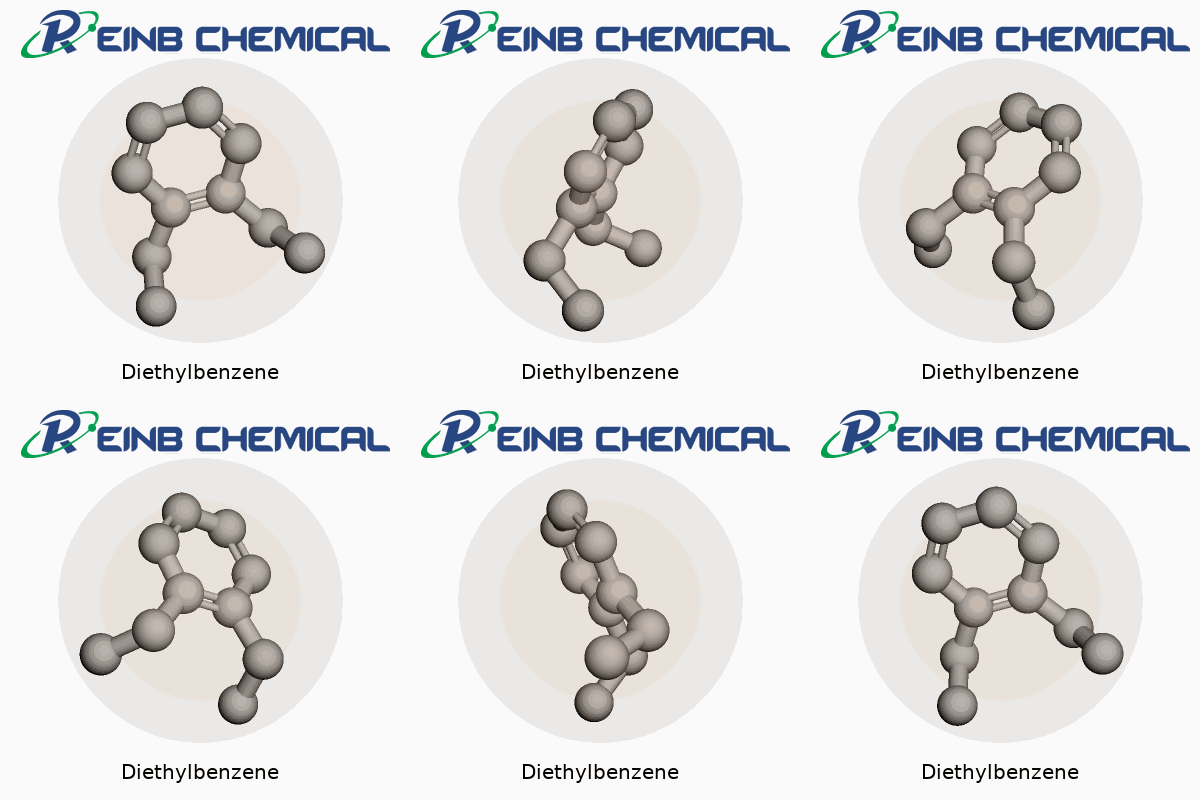
| Names | |
| Preferred IUPAC name | 1,2-Diethylbenzene |
| Other names |
n,n-diethylbenzene diethylbenzenes |
| Pronunciation | /daɪˌiːθəlˈbɛnziːn/ |
| Identifiers | |
| CAS Number | 25340-17-4 |
| Beilstein Reference | 0778735 |
| ChEBI | CHEBI:28441 |
| ChEMBL | CHEMBL14228 |
| ChemSpider | 7271 |
| DrugBank | DB03871 |
| ECHA InfoCard | 100.134.047 |
| EC Number | 202-841-1 |
| Gmelin Reference | Gmelin 120262 |
| KEGG | C01770 |
| MeSH | D014907 |
| PubChem CID | 8230 |
| RTECS number | DI0175000 |
| UNII | 6X9OC3H4II |
| UN number | UN2380 |
| Properties | |
| Chemical formula | C10H14 |
| Molar mass | 162.24 g/mol |
| Appearance | Colorless liquid |
| Odor | aromatic |
| Density | 0.867 g/cm³ |
| Solubility in water | Insoluble |
| log P | 3.75 |
| Vapor pressure | 0.16 mmHg (at 25°C) |
| Acidity (pKa) | 12.4 |
| Basicity (pKb) | 6.25 |
| Magnetic susceptibility (χ) | -69.5·10⁻⁶ cm³/mol |
| Refractive index (nD) | 1.490 |
| Viscosity | 0.963 cP (at 25 °C) |
| Dipole moment | 1.15 D |
| Thermochemistry | |
| Std molar entropy (S⦵298) | S⦵298 = 389.27 J·mol⁻¹·K⁻¹ |
| Std enthalpy of formation (ΔfH⦵298) | –52.7 kJ/mol |
| Std enthalpy of combustion (ΔcH⦵298) | −5970 kJ·mol⁻¹ |
| Hazards | |
| GHS labelling | GHS02, GHS07 |
| Pictograms | GHS02,GHS07 |
| Signal word | Warning |
| Hazard statements | H226, H304, H315, H319, H335, H336, H411 |
| Precautionary statements | P210, P261, P273, P301+P310, P303+P361+P353, P305+P351+P338, P331, P405, P501 |
| NFPA 704 (fire diamond) | 2-2-0 |
| Flash point | 64 °C |
| Autoignition temperature | 432 °C |
| Explosive limits | 1.1–6.7% |
| Lethal dose or concentration | LD50 oral, rat: 6800 mg/kg |
| LD50 (median dose) | LD50 (median dose): 4300 mg/kg (rat, oral) |
| NIOSH | NIOSH: EN8575000 |
| PEL (Permissible) | PEL (Permissible Exposure Limit) of Diethylbenzene: "25 ppm (150 mg/m³) TWA (OSHA) |
| REL (Recommended) | 100 mg/m3 |
| IDLH (Immediate danger) | 150 ppm |
| Related compounds | |
| Related compounds |
Ethylbenzene Isopropylbenzene Trimethylbenzene Cumene |




