

Chemistry often advances through curiosity and effort to find safer or more efficient solutions. Bismuth neodecanoate started gaining traction during the late 20th century, largely because industries wanted better performing and less toxic alternatives to lead and tin compounds. Heavy metals like lead were widely used in plastics, paint, and fuel, but regulatory pressures grew stronger as evidence mounted about their toxicity. Researchers spotted the low toxicity of bismuth salts and found a way to combine this relatively safe metal with synthetic carboxylic acids—neodecanoic acid offered stability and solubility. Early patents from chemical companies in the US, Europe, and Japan tracked steady improvements in synthesis and application, from heat stabilizers for PVC to catalysts in polymer production. Over time, the material began to show up in laboratories, then in scaled-up production lines across diverse sectors, from coatings to elastomer manufacturing.
Bismuth neodecanoate appears as a slightly viscous, yellowish liquid or semi-solid, depending on its formulation. It emerges as a result of reacting bismuth salts with neodecanoic acid, yielding an organometallic compound that bridges inorganic and organic chemistry. Unlike the chalky, brittle texture of metallic bismuth, the neodecanoate form brings hydrophobic and oleophilic properties, which makes it compatible with organic solvents, oils, and polymers. Its growing popularity rests on regulated environments demanding non-toxic options without sacrificing technical performance in products like PVC or synthetic rubbers. Handling requirements—like compatibility with other metal soaps and ingredients—helped this material become a mainstay in colorants, stabilizers, and adhesives. Producers and plant operators gravitate towards it for its safe handling profile and regulatory acceptance.
You can spot bismuth neodecanoate by its pale-yellow hue and characteristic odor of fatty acids. The compound shows an average bismuth content around 20-29% by weight, tailored to specific grades. It dissolves in many hydrocarbons and esters, separating out in water. This property helped industries integrate it into oily, hydrophobic systems where it can interact closely with polymer chains or reactants. The compound sits stable across a wide temperature range, usually from -20°C up to about 200°C, which gives processing windows for a variety of catalysts and stabilizers. The neodecanoate ligand resists hydrolysis and oxidation under most industrial processing conditions, allowing product manufacturers to push heat stabilization and chemical resistance for the end products.
Manufacturers typically provide sheets detailing bismuth content, acid value, viscosity, specific gravity, and residual free acid levels. Purity levels play a big role in sensitive industries, where any contamination may spoil big batches. Specific gravity ranges from 1.07-1.09 g/cm³. Many suppliers certify their products as having less than 0.2% free acid content, and the standard viscosity hovers around 400–900 mPa•s at 25°C. Packaging usually involves drums or IBC totes with clear hazard labeling, such as “Environmental Hazard” if required by local regulations. Most reputable suppliers back their products with batch certificates, traceability records, and REACH, RoHS, or other regional compliance documentation, all intended to reassure end users that the compound matches strict quality and safety requirements.
Synthesizing bismuth neodecanoate requires careful mixing under exclusion of water to avoid hydrolysis. Producers start by combining bismuth oxide or bismuth nitrate with neodecanoic acid. This step yields a bismuth carboxylate, typically via heating to 80–120°C, and removal of water drives the reaction completion. Solvents like xylene support uniform distribution and better heat transfer but are often distilled off. The final step involves purifying the product through washing or filtration to eliminate any unreacted acids or inorganic residues. Careful attention during this stage helps achieve a product that matches technical grade specifications. On an industrial scale, specialty reactors with atmosphere control and effective stirring reduce unwanted side reactions and stabilize final yields.
In processing environments, bismuth neodecanoate reacts primarily as a Lewis acid catalyst and a salt metathesis agent. Mixed with chlorides, it can exchange ligands to create new complex salts. In PVC manufacturing, it scavenges hydrogen chloride released during thermal breakdown of the polymer, preventing yellowing and embrittlement. In coatings or adhesive synthesis, the compound catalyzes esterification or transesterification reactions. Researchers sometimes modify the ligand structure, replacing neodecanoic acid with similar branched fatty acids, tweaking properties to fit niche applications. Bismuth neodecanoate also participates in co-catalysis: it works synergistically with zinc or calcium salts in heat-stabilized plastics, leveraging multiple metal centers for longer-lasting performance.
Expect to see bismuth neodecanoate listed under slightly different names on technical datasheets. Common aliases include bismuth neodecanoate, bismuth neodecanoic acid salt, or bismuth(III) neodecanoate. Trade names might appear as BiND, BiNDA, or similar depending on the country or supplier. In regulatory documentation, the CAS number 34364-26-6 provides the most reliable identifier. Enthusiasts in custom synthesis circles sometimes just call it “Bi-docanoate” for brevity, while multinationals in the plastics sector use official product line branding. This variation mostly stems from differences in translation, local rules, or innovation in proprietary blends.
Production teams and users in plants find working with bismuth neodecanoate relatively manageable compared to traditional heavy metal compounds. Safety data sheets usually grade it as non-combustible and low in acute toxicity, though contact with eyes or prolonged skin exposure should be avoided. Certified PPE like gloves and goggles make daily handling uneventful. Ventilation systems help disperse mild organic vapors, especially if solvents like kerosene or mineral spirits are also present. Disposal and spillage receive careful attention—solvent residues and trace metal content call for chemical collection and specialized waste management streams to prevent environmental contamination. In Europe, bismuth neodecanoate remains largely unrestricted compared to lead-based analogues, but plant managers watch for evolving regulations as authorities reassess metal carboxylates.
Polyvinyl chloride (PVC) factories count on bismuth neodecanoate as a main heat stabilizer, phasing out lead and cadmium salts that once drove up production risks and environmental costs. The material supports medical tubing and children’s toys, where non-toxic processing aids must pass stringent migration and leaching standards. In adhesives and sealants, the compound speeds up curing processes while providing long shelf stability. Paint and coatings chemists reach for it to promote smooth film formation and prevent degradation from UV or heat. Lubricant manufacturers also dope specialty oils with bismuth neodecanoate, banking on its anti-wear and friction-reducing capacity. Its track record in pharmaceutical glass production gives another nod to low-toxicity standards, along with emerging uses in flexible electronics and energy storage.
Specialty chemical labs experiment with bismuth neodecanoate’s reactivity, looking for upgrades to industrial catalysts or even alternative medicine. Solid-state chemists, polymer scientists, and even green chemistry researchers lean into the low toxicity and rich coordination chemistry bismuth offers. For example, current projects test its role in next-generation biodegradable polymers, using the metal center to promote clean breakdown over time. Electrochemical teams investigate bismuth neodecanoate in battery technologies, chasing safer and more efficient electrodes for near-term commercialization. Academic groups present papers on ligand-exchange chemistry, seeking out ways to fine-tune the stability or tailor reaction kinetics. The search for sustainable, “green” manufacturing puts this compound in a prime spot for pilot studies and joint industry-academic collaborations.
Multiple animal studies and real-world workplace monitoring point to bismuth neodecanoate as a much safer alternative to old-fashioned organotins or lead carboxylates. Acute oral and dermal toxicity studies show high threshold doses for adverse effects. In inhalation studies, the compound tends to show low volatility, so chronic exposure risk drops in ventilated settings. Regulatory bodies like the US EPA and the European Chemicals Agency track health and environmental data, with current consensus suggesting bismuth carboxylates carry no evidence of carcinogenicity or mutagenicity. Wastewater discharge monitoring remains a must, since bioaccumulation studies still have gaps—my own experience in compliance audits shows that even low-toxicity metals can spark concern if regulators worry about persistence or unusual metabolites. Workers and environmental managers rely on fresh toxicology data to maintain risk-based safety cultures.
Regulatory change always steers investment and research, and for bismuth neodecanoate this trend means expanding markets far beyond its original PVC roots. The ongoing drive across America, Europe, and Asia to remove heavy metals from industrial streams continues to favor bismuth compounds. Engineers foresee roles in recycling-friendly plastics, electronics packaging, and even new classes of aerospace-grade composites. Teaming up with other bio-based or non-toxic ingredients, bismuth neodecanoate could help shape genuinely closed-loop material systems, reducing waste and supporting circular economy models. The compound’s chemistry also positions it for roles in hybrid organic-inorganic catalysts, emergent battery platforms, and maybe even medical diagnostics. For now, product stewardship, regulatory foresight, and investment in green production methods will shape whether these possibilities come to fruition.
Bismuth neodecanoate doesn’t appear on most people’s radars. For those who spend time in labs or factories, though, it plays a clear role. Bismuth itself has earned a reputation as a safer alternative to heavy metals. With concerns about lead and cadmium exposure growing, producers have turned to bismuth compounds, including bismuth neodecanoate, to help them get things done without creating a legacy of contamination.
This compound turns up a lot in industrial coatings. Picture metal bridges, pipelines, or ship hulls that stay exposed to weather, salt, and time for years. Keeping rust and corrosion at bay is tricky business. Engineers use bismuth neodecanoate as a catalyst in alkyd resin paints, which coat these surfaces and provide a tough barrier. I remember talking to a corrosion engineer who explained how a single unreliable additive could turn years of investment into a maintenance nightmare. In paint formulations, bismuth neodecanoate can help shorten drying times and promote a smooth finish. The result is coatings that stand up longer — good for budgets and better for the environment since repainting means more solvents in the air and more particulate matter washing into waterways.
The push to step away from toxic metal driers isn’t new. Lead-based driers once pulled their weight in industry, but their dangers made substitutes necessary. Bismuth, in compounds like bismuth neodecanoate, answers that call. It has low toxicity compared to others traditionally used in manufacturing. Bismuth itself even sees use in medicine, like some stomach relief tablets.
Switching to bismuth-based chemicals doesn't solve every problem, but it does cut out some well-known risks. I’ve read studies showing that workers exposed to bismuth neodecanoate show much lower health risks than those working with leaded counterparts. If a spill happens, cleanup is less worrisome and doesn’t leave the same kind of lasting marks on the local ecosystem. In a world where regulations only get stricter, products built with bismuth compounds earn a smoother path to market.
Bismuth neodecanoate pops up outside paints too. It finds use as a catalyst in polyurethane production—those foam cushions in car seats or home insulation panels start their molecular journey with reactions that bismuth neodecanoate can speed up. Chemists like me pay attention to these fine details, because one poor choice in catalyst can impact product safety, lifespan, and manufacturing cost.
That said, using bismuth neodecanoate brings its own technical challenges. Producers need to know how to handle bismuth’s unique properties, since it behaves differently than the metals we used in the past. Keeping the supply chain open also proves important, especially since bismuth isn’t as abundant as iron or copper. Fostering reliable recycling methods will go a long way. Recovering bismuth compounds from finished products after use could help ensure that manufacturers don’t hit an unexpected shortage down the road.
As industries learn from their mistakes with hazardous metals, replacements like bismuth neodecanoate start to shine—made for technical jobs, but with an eye on sustainability. From paints and coatings to foam production, this compound answers both performance and safety needs. The trick lies in understanding where it fits best, backing decisions with ongoing research, and staying honest about trade-offs. That’s a path forward that smarter manufacturers can trust.
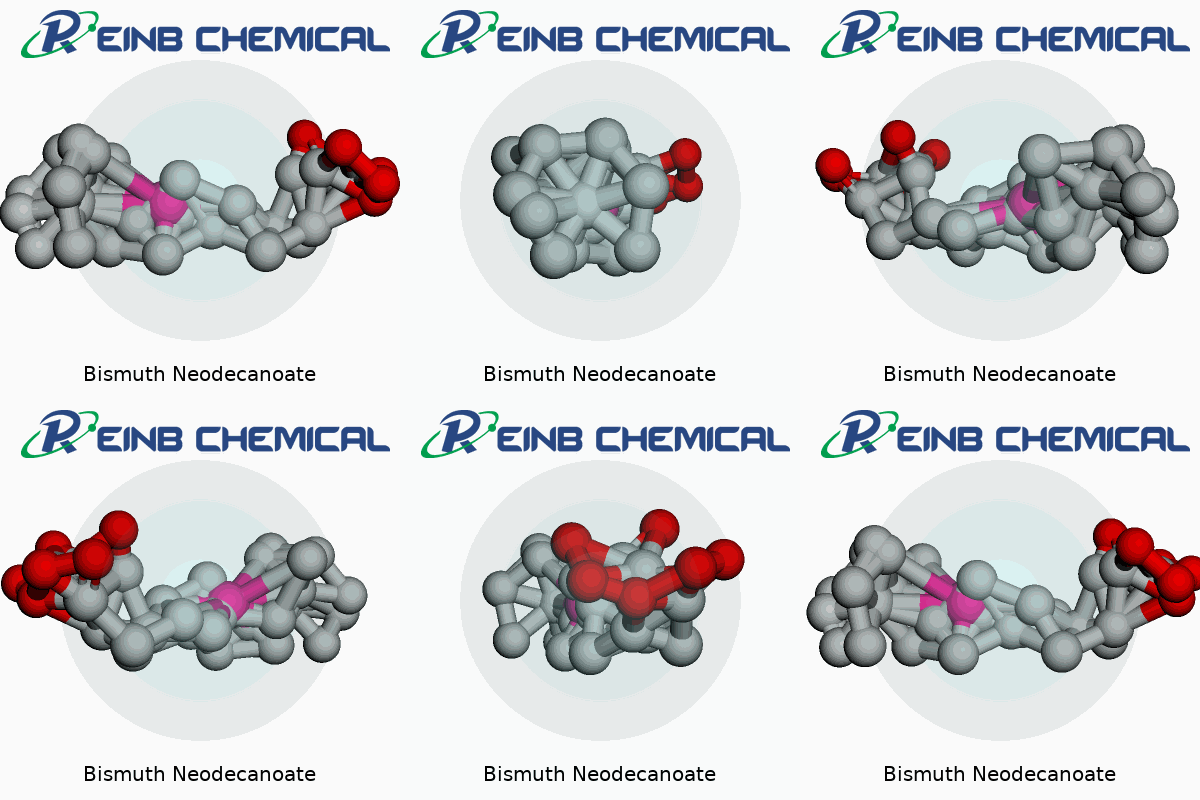
Bismuth Neodecanoate shows up in technical discussions as Bi(C10H19O2)3. Chemists call it bismuth tris(2,2-dimethyloctanoate). Three neodecanoate groups hook up with a bismuth ion at the center. The structure looks less like a flat molecule and more like a three-pronged fork, with bismuth holding onto long, branching carbon chains through oxygen bridges. Most industrial-grade molecules bear those stubborn C10 tails, giving them that chunky, oil-lover’s backbone that drives their usefulness.
Bismuth Neodecanoate lands many jobs in the coatings and plastics worlds. It lets manufacturers harden silicone elastomers, polyurethanes, and plastics without dropping a toxic bomb on workers or customers. Companies keep an eye on environmental standards these days. Many regions banned or cut back on lead-based additives, and bismuth stepped up as an answer. Teams dealing with paints and sealants appreciate its lower toxicity, along with stability in high-heat or high-moisture environments. It doesn’t break down and sneak out heavy metals into groundwater — a common regulation headache with other metallic driers.
Health concerns have shaped the way people look at bismuth compounds. The neodecanoate form keeps the bismuth from flying around as dust or fumes, which reduces workplace risk. Regulatory records show fewer safety incidents compared to older lead or tin-based catalysts. Still, gloves and goggles stay on in the lab. The neodecanoate groups add bulk but don’t make it edible, and nobody wants lingering vapors in the air. Occupational safety sheets suggest strong ventilation, especially for high-use manufacturing lines.
Moving to bismuth neodecanoate narrows the ecological footprint. Bismuth itself does not get flagged for bioaccumulation or aquatic toxicity under current environmental laws. The neodecanoate ligands, made from heavily branched carboxylic acids, do break down, but not overnight. Municipal wastewater plants handle small spills without panic. Compared to lead, silver, or cadmium in similar applications, the shift looks like an improvement. Studies in the past decade highlight reduced soil contamination near production sites.
Switching to bismuth neodecanoate brings up questions of supply and price. Bismuth comes mostly from refining lead, copper, gold, and tungsten ores. China, Peru, and Mexico dominate the supply chain. As global markets stress over sustainable sourcing, companies look for greener ways to grab bismuth without piggybacking on heavy mining. On the cost front, bismuth-based catalysts run a bit higher than low-end tin or antimony products, but tight rules on lead and mercury push buyers toward safer options, no matter the slight markup.
Those putting together paints or plastics don’t just swap out bismuth neodecanoate one-for-one. Teams tweak temperatures, shift mixing times, or play with solvent blends to hit the right cure speed. A little experimentation keeps projects on track. My friends in lab coats talk about shorter learning curves compared to older, more hazardous additives. Nobody misses the worry over workplace lead exposure. When bismuth neodecanoate shows up on an ingredient list, it often flags a modern, compliance-minded product.
Bismuth neodecanoate goes into a surprising range of industrial products, from paints to plastics and even specialty catalysts. It has earned attention as a possible alternative to metals like lead due to its perceived lower toxicity, but people still wonder: how safe is it?
I’ve handled my share of chemical safety sheets over the years, and bismuth compounds generally stand out because bismuth itself ranks among the least toxic heavy metals. Cookware sometimes even uses bismuth alloys because the metal doesn't build up in the human body the way lead or cadmium do. Still, each compound tells its own story, and neodecanoate versions deserve close inspection.
The available data show bismuth neodecanoate sits in a low to moderate risk category for acute toxicity. Swallowing large quantities likely causes stomach upset, and breathing in dust or fumes could irritate airways. Skin or eye contact sometimes leads to minor irritation. No one wants bismuth neodecanoate drifting around in their living room, but its risks fall short of those tied to options like lead stearate or organotin catalysts. A toxicology summary from regulatory agencies highlights no strong links to carcinogenicity, reproductive problems, or persistent environmental build-up.
Still, “low hazard” doesn’t mean harmless. Long stretches working with bismuth neodecanoate in confined or dusty places may put a worker at risk of irritation or allergic reactions. Dust clouds belong in a science fiction movie, not in someone’s lungs. Mistakes in handling or a lack of basic personal protective equipment easily multiply tiny everyday exposures. Every chemical deserves a healthy respect, no matter its number in the hazard code book.
On the environmental side, bismuth neodecanoate doesn’t roam as widely as more persistent compounds. It breaks down over time, and bismuth generally tends to linger less in living organisms compared with metals like mercury. Still, dumping this substance into waterways or soil can harm aquatic animals and upset fragile ecosystems. I live near a small stream, so stories of illegal dumping hit close to home—chemicals should follow proper disposal channels, not the nearest drain.
Bismuth neodecanoate works as an effective replacement for nastier substances in products and processes. Paints and sealants that once relied on toxic metals have moved to bismuth-based formulations that pass strict tests for workplace and consumer safety. Regulations now push industries to trade up to less hazardous options when possible, and most companies using this chemical already apply tight safety protocols, proper ventilation, and waste management.
Safer workstations depend less on luck than on habit and know-how. Personally, I’ve seen training and practical know-how cut exposure risks more than rulebooks alone. Gloves and goggles can do their job, but having a culture of double-checking containers and following clear labeling makes a bigger difference. Open communication channels for reporting spills or headaches is where real workplace safety starts.
Anyone working with bismuth neodecanoate controls most risks by using it in well-ventilated spaces, wearing basic protective equipment, and keeping it clear of food areas and drains. Storage away from heat and sunlight and following local hazardous waste rules keeps everyone safer. Responsibility doesn’t fall only to industry; regulators should stay up to date on emerging research and tune exposure limits as new findings emerge.
Bismuth neodecanoate likely offers a safer path than other metallic additives, but treating it with the respect any chemical deserves keeps workers, the public, and the environment on the safest side.
Bismuth Neodecanoate tends to show up on the scene in rubber, paint, and coatings labs. Anyone working with it for more than a week knows not to treat it like an average chemical. Its low toxicity compared to other metal carboxylates doesn’t mean it’s harmless or fuss-free. There’s always a reason for carefully managing storage and handling. The stuff stains, gives off a faint odor, and reacts if you get sloppy with temperature or moisture. You don’t want a day ruined by a gross spill, sticky gloves, or fumes at your workstation.
Most chemical storerooms struggle with temperature swings and sunlight beaming through a side window. Bismuth Neodecanoate stays far more stable in a cool, dry spot, somewhere between 15°C and 25°C. Pushing above that and you’ll risk decomposition or thickening. Sunlight tends to nudge reactions you never wanted. Direct light also fades labels and weakens packaging, so you’re better off picking a spot away from both heat sources and big windows. That’s the simple way to avoid headaches.
Keep this compound away from moisture. Even a little humidity can shift the chemical balance and make things worse for process control. Tight seals matter—a lot. After snagging a sample, cap bottles right away. Forgetting or getting lazy just brings out clumping, stickiness, or container corrosion. Jars and drums left uncapped even a few minutes pick up moisture. In shared spaces, sometimes people grab materials in a hurry. Labels, checklists, and some good old peer pressure tend to keep risks down.
Don’t stash Bismuth Neodecanoate with strong oxidizers, acids, or bases. A mistake like that can spark a mess or even a reaction. Instead, safe storage usually means chemical-resistant, airtight containers—glass, high-density polyethylene, or lined steel. Avoid using soft plastics that might break down over a season or two. I’ve watched what happens after someone pours a solvent in the wrong bin late in the day. The result? Cleanup and wasted product. Having separate shelves and simple labeling—red tape for sensitive compounds, for instance—makes a huge difference in any lab or warehouse.
No one likes handling safety gear, especially for mundane tasks. Still, gloves, goggles, and a proper lab coat turn big risks into non-issues. People sometimes skip steps after lunch or if bored. I’ve yanked off gloves to text, only to drag them across the bench later by accident. It’s easy to get careless. Always treat Bismuth Neodecanoate as if it stains and irritates on contact. Wash up after use, and don’t eat near the stuff. If a little lands on your gear or hands, soap and water deal with it before it travels elsewhere.
Chemical collection drums need clear signage and tight seals for leftover Bismuth Neodecanoate. Dumping it with ordinary trash risks exposure or fines, which nobody wants. A simple bulletin board near storage helps with reporting leaks or odd smells—quick communication beats long meetings every time. Emergency showers, eyewash stations, and spill kits should always be tested and well-stocked. I’ve seen outdated kits sit unused for years, only to fall short the moment they’re needed.
Manufacturers can lead by supplying clear safety data sheets and resistant packaging. Training refreshers—just a 30-minute run-through each quarter—catch bad habits before they turn serious. Asking tech staff what works and what doesn’t often uncovers simple fixes. Long-term, better chemical management comes down to staying organized, keeping people engaged, and not cutting corners for the sake of convenience.
Bismuth Neodecanoate is no household name, but people in plastics, coatings, and catalysis see it as a real workhorse. A lot depends on how it gets from the factory floor to the people using it. Few folks outside the supply chain see the thought that goes into every drum, can, or bottle of the stuff. I’ve seen firsthand how careful packaging and handling go a long way in making life easier in the lab and on the plant floor.
Most Bismuth Neodecanoate shows up in steel drums. Companies shipping large amounts lean toward the standard 200-liter drum, often lined or painted inside to keep rust away and avoid reaction with the chemical. Workers can roll, forklift, and stack these drums, so storage and movement feel routine. These drums carry enough labels and hazard markings that no one misses the warning. For folks not needing a truckload, smaller pails around 20 to 25 liters exist. I remember my first batch—it came in a thick plastic pail. The screw caps sealed tight and stayed leak-free through a humid summer. That simple detail cut down on lost material, wasted clean-up, and headaches from minor spills.
No one wants their expensive catalyst leaking all over a warehouse. That is a big reason manufacturers use UN-certified drums and pails—global safety standards press them hard to minimize hazard, especially since bismuth neodecanoate stays classified as hazardous goods for shipping despite being less toxic than older heavy-metal options. Some buyers worry about contamination, so liners and sealed containers stay common. If someone works in pharmaceuticals or electronics, a little impurity in their package can ruin days of work, so tamper-evidence and testing tags come with many shipments. Over the years, anti-glug inserts and vented caps showed up to keep pouring steady and prevent air pressure from splashing the product on your hands and arms.
Many suppliers break out laboratory-size glass bottles, ranging from 500 milliliters to a couple of liters. While most industrial buyers prefer big drums, research labs and specialty firms buy in smaller lots, often sealed in tough glass or high-density polyethylene bottles with tight screw caps and foil liners. That kind of packaging means you can measure out precise amounts without staring down a three-foot drum. I found this especially helpful for pilot projects where one liter may last a year. The risk of waste or spoilage drops, and you get what you need with no fuss.
Some larger buyers want Bismuth Neodecanoate in intermediate bulk containers (IBCs) that hold 1,000 liters or more. Large coating and polymer manufacturers push for this size. The sturdy plastic tanks surrounded by steel cages save them money and labor. Filling and draining happen with pumps, no heavy lifting or drum-rolling required. It’s energy-saving, and it shrinks down the total packaging waste compared to hundreds of small containers tossed out after use. IBCs also help with traceability: tracking a single container is less trouble than tracking a mountain of small bottles.
The world keeps asking for safer and greener packaging. Some companies now collect empty drums and containers, clean them, and reuse them. Others look for lighter packaging to cut down emissions in transport. The industry benefits from these changes: less waste, safer storage, and fewer accidents. Smarter packaging makes everyone’s job easier from shipping dock to science bench, and that’s worth celebrating.
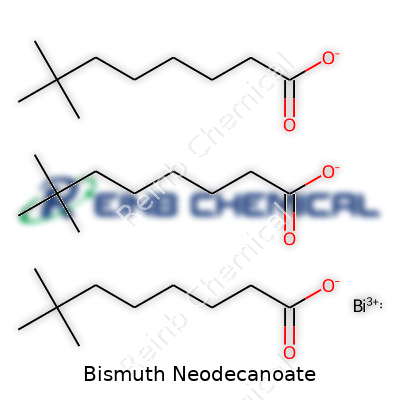
| Names | |
| Preferred IUPAC name | Bismuth tris(3,5,5-trimethylhexanoate) |
| Other names |
Bismuth(III) neodecanoate Neodecanoic acid, bismuth(3+) salt Bismuth trineodecanoate |
| Pronunciation | /ˈbɪz.məθ niː.oʊˌdɛk.əˈnoʊ.eɪt/ |
| Identifiers | |
| CAS Number | 34364-26-6 |
| Beilstein Reference | 1361818 |
| ChEBI | CHEBI:38764 |
| ChEMBL | CHEMBL2107873 |
| ChemSpider | 21241239 |
| DrugBank | DB11137 |
| ECHA InfoCard | 03b5a2f5-fe0c-47c4-9ec0-d6c6cfbe7793 |
| EC Number | 267-549-0 |
| Gmelin Reference | 84136 |
| KEGG | C18612 |
| MeSH | D001817 |
| PubChem CID | 3032736 |
| RTECS number | OV9600000 |
| UNII | KB09E3Y8FV |
| UN number | UN3082 |
| Properties | |
| Chemical formula | C40H75BiO6 |
| Molar mass | 763.1 g/mol |
| Appearance | Clear yellow liquid |
| Odor | Slightly fatty |
| Density | Density: 1.1 g/cm³ |
| Solubility in water | Insoluble |
| log P | 3.6 |
| Basicity (pKb) | 9.2 |
| Magnetic susceptibility (χ) | Diamagnetic |
| Refractive index (nD) | 1.570 |
| Viscosity | 600 - 1200 mPa.s (25°C) |
| Dipole moment | 0.00 D |
| Pharmacology | |
| ATC code | A02BX05 |
| Hazards | |
| GHS labelling | GHS07, GHS08 |
| Pictograms | GHS08 |
| Signal word | Warning |
| Hazard statements | H315: Causes skin irritation. H319: Causes serious eye irritation. H335: May cause respiratory irritation. |
| Precautionary statements | P261, P264, P271, P272, P273, P280, P302+P352, P304+P340, P305+P351+P338, P312, P321, P332+P313, P333+P313, P337+P313, P362+P364, P391, P501 |
| NFPA 704 (fire diamond) | 1-1-0 |
| Flash point | > 113 °C |
| Lethal dose or concentration | LD50 (oral, rat): > 5000 mg/kg |
| LD50 (median dose) | LD50 (median dose): Oral rat LD50 >5000 mg/kg |
| NIOSH | Not Listed |
| PEL (Permissible) | PEL (Permissible Exposure Limit) for Bismuth Neodecanoate: Not established |
| REL (Recommended) | 500 mg/kg bw/d |
| Related compounds | |
| Related compounds |
Bismuth Subsalicylate Bismuth Subgallate Bismuth Oxide Bismuth Oxychloride Bismuth Citrate |




